Introduction
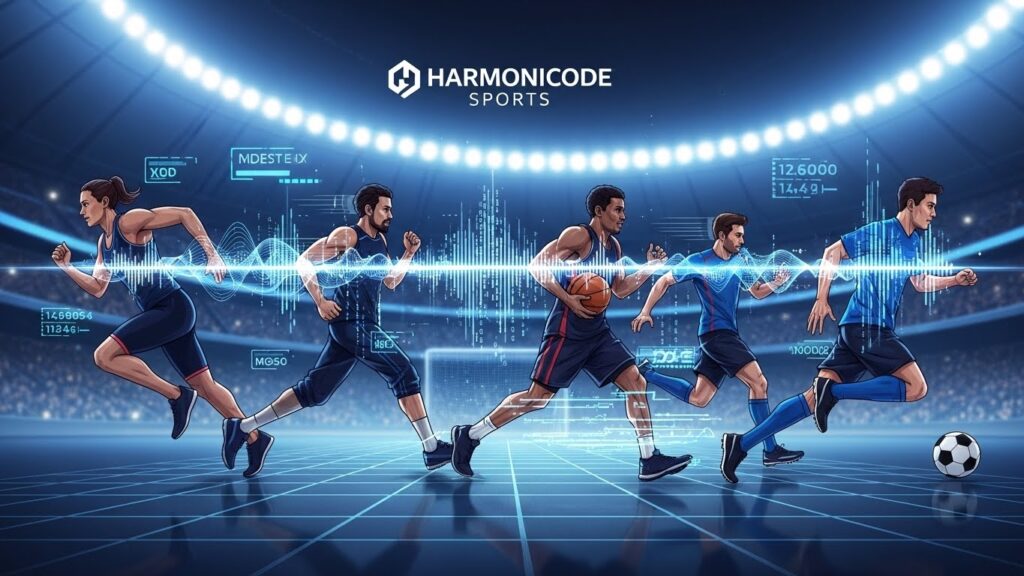
Harmonicode sports is an emerging concept that blends harmonic pattern analysis with advanced sports analytics to understand athletic performance in deeper, more dynamic ways. Rather than relying solely on traditional statistics or surface-level observations, harmonicode sports focuses on the coded rhythms, movement signatures, and performance sequences that athletes naturally produce. These patterns can reveal subtleties—such as micro-timing, force distribution, or strategic pacing—that are often invisible through conventional metrics. As professional leagues and training academies continue adopting high-precision technology, harmonicode sports is becoming a powerful tool for coaches, analysts, and organizations seeking a competitive edge.
The foundation of harmonicode sports lies in studying how repeated motion and patterned behavior influence outcomes. For example, a basketball player’s shooting streak may contain rhythmic indicators that predict accuracy over the next several possessions. A sprinter’s stride may express harmonic consistencies that correlate with fatigue or acceleration capability. When these patterns are coded and analyzed, teams gain a clearer picture of how to optimize technique, timing, and decision-making. This approach moves beyond raw stats and reveals the underlying mathematical harmony behind each performance.
Today, harmonicode sports is being explored in biomechanics labs, esports coaching programs, and traditional athletic environments. Its integration with sensors, machine learning, and predictive modeling makes it a forward-thinking methodology for anyone seeking more accurate insights. As competitive environments become more data-intensive, coaches are turning to harmonicode sports to create actionable strategies that improve adaptation, efficiency, and long-term development. Whether used to refine training methods or design new scouting models, this analytical framework helps teams understand not just what athletes do—but why they do it.
The Core Principles Behind Harmonicode Sports
Harmonicode sports begins with the study of rhythmic data, which identifies recurring patterns within movement and performance. Every athlete produces sequences that can be mapped as coded harmonics—consistent numerical signatures showing how their body interacts with speed, pressure, fatigue, and decision-making. By interpreting these harmonics, analysts uncover trends that forecast performance fluctuations before they happen. For example, a pitcher’s wind-up may contain slight timing changes that predict pitch success, and recognizing these signals allows coaches to intervene strategically. Harmonicode sports interprets this “hidden language” of motion, giving teams a deeper understanding of athletic tendencies.
The second principle of harmonicode sports is predictive modeling. Once rhythmic codes are established, algorithms assess how variations influence real-time outcomes. This is especially valuable in fast-paced sports like soccer, basketball, and hockey, where milliseconds can change the result of a play. By modeling these harmonics, teams can tailor training regimens, correct inefficiencies, and even design in-game adjustments. A player may unknowingly fall into a detrimental rhythm during high-pressure moments; harmonicode analysis highlights and corrects these issues before performance declines. This principle positions harmonicode sports as a future-focused system rooted in continuous optimization.
Read More: 904.207.2696
How Harmonicode Sports Enhances Athletic Training
In training environments, harmonicode sports gives coaches a new dimension of insight. Instead of focusing only on visible movement flaws, trainers can analyze coded rhythm patterns that show deeper inefficiencies—like delayed reaction timing or asymmetrical joint loading. Understanding an athlete’s harmonic profile helps create customized drills that target specific flaws. For instance, if a runner develops irregular harmonic patterns during the final 20 meters of a sprint, coaches can design endurance-timing drills that stabilize those fluctuations. The result is training that feels more intuitive and produces faster, more sustainable progress.
This method also reduces injury risk. Harmonicode sports identifies micro-instabilities in motion—issues that often precede strains or overuse injuries. When athletes’ rhythm patterns drift outside their optimal harmonic zone, trainers can intervene early. This is especially important in high-impact sports like football or gymnastics, where minor imbalances lead to major issues over time. With harmonicode monitoring, training becomes proactive rather than reactive. Athletes stay healthier, develop greater longevity, and maintain consistent performance under demanding schedules.
Harmonicode Sports in Professional Game Strategy
Coaches in professional leagues are increasingly adopting harmonicode sports to refine game strategy. Teams can analyze harmonic patterns from both their athletes and opposing players, offering a strategic edge. For example, a basketball team might recognize that an opponent’s shooting rhythm weakens on the second night of back-to-back games, allowing defensive plans tailored around that information. These insights go far beyond traditional scouting reports, enabling coaches to predict tendencies with greater accuracy.
In addition, harmonicode sports allows game plans to adapt in real time. Motion sensors and analytics dashboards can identify when a player enters an inefficient rhythm—maybe their stride shortens, or their reaction timing lags. Coaches can substitute players or shift tactics based on these coded patterns, improving overall team performance. Harmonicode sports transforms strategy from a static plan into a dynamic system that evolves with every play, ensuring teams stay ahead of their opponents’ movements and tendencies.
Harmonicode Sports and Player Performance Forecasting
One of the greatest strengths of harmonicode sports is its ability to forecast future performance. Because harmonic patterns are consistent and mathematically predictable, analysts can estimate how an athlete will perform under different conditions. This is especially valuable during drafting, scouting, or contract negotiations. Instead of judging an athlete solely on past performance, teams can evaluate their harmonic potential—how adaptable, resilient, or sustainable their rhythm patterns are over time. This provides a clearer picture of long-term value.
Performance forecasting also helps athletes understand their own growth trajectory. When players review their harmonic profiles, they see exactly where improvement is happening and where weaknesses persist. This encourages smarter training habits and long-term development planning. Whether preparing for tournaments or building a multi-season training strategy, harmonicode sports gives athletes a predictive roadmap that boosts confidence and direction.
The Role of Technology in Advancing Harmonicode Sports
Technology is the backbone of harmonicode sports. Motion-capture systems, wearable sensors, and biometric devices gather real-time harmonic data with precision. These tools track speed, timing, angle, and pressure to create a complete coded representation of performance. As hardware becomes more accessible, even amateur athletes can use harmonicode sports to elevate their training. Gyroscopic sensors in consumer smartwatches and fitness wearables already capture much of the data necessary to form basic harmonic patterns.
But the true breakthrough lies in software. Advanced algorithms analyze millions of variables in seconds, simplifying complex harmonic code into actionable insights. Coaches receive visual dashboards that highlight optimal rhythm zones, breakdown points, and improvement opportunities. This technology continues to evolve, and as machine learning improves, harmonicode sports will become even more accurate, user-friendly, and widely adopted across all levels of competition.
Real-World Applications and Future Potential of Harmonicode Sports
Harmonicode sports is already influencing major athletic organizations. Professional cycling teams use rhythm-coding to analyze cadence efficiency and fatigue cycles. Baseball franchises apply harmonic models to pitching mechanics, predicting performance declines before they happen. Even esports coaches are studying harmonic input patterns—like mouse movement rhythms or reaction timing sequences—to enhance competitive consistency. These examples show that harmonicode sports is versatile and adaptable across both physical and digital athletic environments.
Looking forward, harmonicode sports has the potential to change how the world views athletic excellence. As the technology becomes more mainstream, athletes at all levels will use harmonic patterns to improve performance, reduce injuries, and build sustainable careers. Schools, academies, and training centers will incorporate harmonicode principles into standard coaching curricula. The future of sports performance will not just be about raw talent—but about understanding the underlying rhythms and mathematical harmony that drive elite athletic success.
Conclusion
Harmonicode sports represents a powerful evolution in athletic analysis, blending rhythm science, coded patterns, and predictive modeling to unlock deeper insights into performance. Its ability to reveal hidden tendencies, enhance training, and forecast outcomes makes it one of the most forward-thinking methodologies in modern sports science. Whether used by coaches seeking strategic advantages, athletes refining their technique, or organizations evaluating long-term potential, harmonicode sports provides clarity in a world where every second, movement, and decision matters.
As technology continues advancing, the impact of harmonicode sports will only grow. Athletes will gain new tools for improvement, teams will strategize with unprecedented precision, and fans will witness a higher level of competitive excellence shaped by mathematics and motion. For anyone invested in the future of sports, now is the time to understand and embrace the harmoniccode approach—a system built not just to interpret performance, but to elevate it in ways once thought impossible.