Introduction
In an era where data-driven decision-making shapes everything from political campaigns to community development initiatives, apeoplesmap.org services have emerged as a vital resource for grassroots organizers, activists, and community leaders across the United States. This innovative platform offers a suite of mapping and data visualization tools specifically designed to help ordinary citizens understand their communities better, organize more effectively, and create meaningful social change from the ground up.
Unlike traditional mapping services that cater primarily to commercial interests or government agencies, apeoplesmap.org services focus squarely on empowering everyday people. The platform provides accessible, user-friendly tools that transform complex demographic data, voting patterns, and community statistics into clear, actionable insights. Whether you’re organizing a voter registration drive in a swing district, planning community resources in underserved neighborhoods, or simply trying to understand the social fabric of your local area, these services offer invaluable support.
What sets apeoplesmap.org services apart is their commitment to democratizing information. In many cases, detailed community data remains locked behind paywalls or buried in technical databases that require specialized knowledge to navigate. This platform breaks down those barriers, offering free or low-cost access to information that can genuinely transform how communities organize and advocate for themselves. The result is a powerful tool that levels the playing field, allowing grassroots movements to compete with well-funded organizations by leveraging better data and smarter strategy.
Understanding the Core Features of Apeoplesmap.org Services
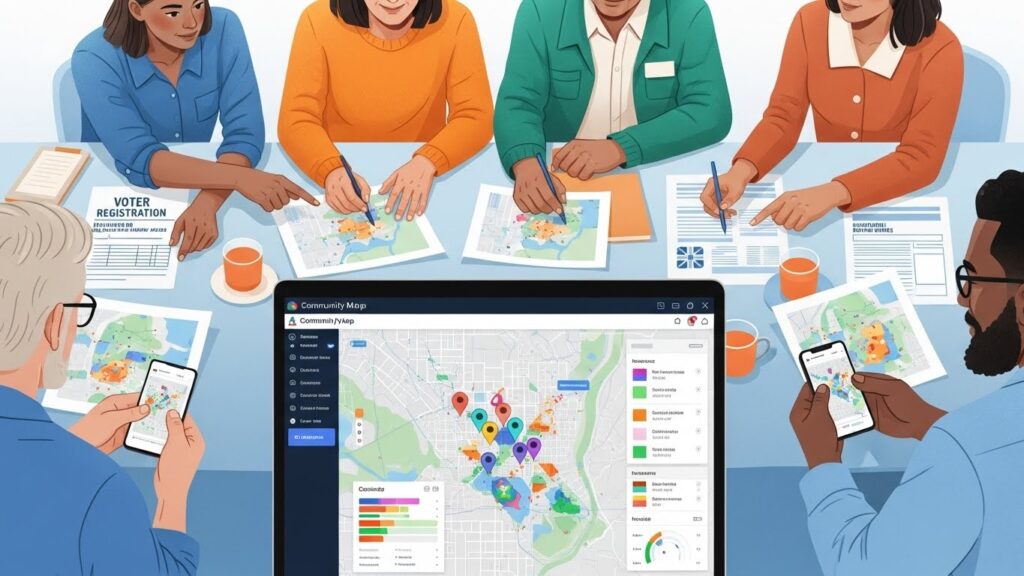
The foundation of apeoplesmap.org services lies in their comprehensive mapping capabilities that go far beyond simple geographic visualization. These tools allow users to layer multiple data sets onto interactive maps, creating rich, multidimensional views of communities. For instance, organizers can overlay voter registration statistics with demographic information, income levels, and historical voting patterns to identify specific neighborhoods where targeted outreach might yield the best results. The platform’s intuitive interface means that even users without technical training can create sophisticated visualizations that would typically require expensive GIS software and specialized expertise.
One particularly valuable feature is the platform’s ability to integrate real-time data updates with historical trends. This temporal dimension allows community organizations to track changes over time, identifying emerging patterns that might otherwise go unnoticed. A neighborhood experiencing rapid demographic shifts, declining voter turnout, or changing economic conditions becomes immediately visible through these tools. This capability enables proactive rather than reactive organizing, helping communities address challenges before they become crises and capitalize on opportunities as they emerge.
Read more:9157656381
Voter Engagement and Political Organizing Tools
Political campaigns and civic engagement initiatives have found apeoplesmap.org services particularly transformative for their ground operations. The platform’s voter targeting tools help organizers identify persuadable voters, understand district boundaries, and plan canvassing routes with unprecedented efficiency. Rather than employing a scattershot approach that wastes resources on already-committed voters or those unlikely to participate, campaigns can focus their limited time and money where they’ll make the most difference. This precision has helped numerous underdog candidates compete effectively against better-funded opponents.
Beyond electoral politics, these services support broader civic engagement efforts like voter registration drives, issue advocacy campaigns, and community education initiatives. The platform helps organizations identify communities with lower registration rates, understand the barriers these communities face, and develop targeted strategies to address them. For example, if data reveals that a particular neighborhood has low registration despite high population density, organizers can investigate whether language barriers, transportation issues, or lack of awareness might be contributing factors. This data-informed approach transforms good intentions into effective action, ensuring that civic engagement resources reach the people who need them most.
Community Development and Resource Allocation
Apeoplesmap.org services have become indispensable tools for community development organizations working to improve quality of life in underserved areas. By mapping the locations of essential services—grocery stores, healthcare facilities, public transportation, parks, and schools—against demographic data, these organizations can identify “resource deserts” where residents lack adequate access to basic necessities. This evidence-based approach strengthens grant applications, supports advocacy efforts for new services, and helps prioritize limited development resources where they’ll have the greatest impact on community wellbeing.
The platform also facilitates collaborative planning by allowing multiple stakeholders to view and contribute to shared maps. A coalition addressing food insecurity, for instance, might use these services to map existing food pantries, soup kitchens, and farmers markets, then identify gaps in coverage where new resources are needed. Community members can contribute local knowledge that official data sources miss, such as informal food distribution networks or barriers like dangerous intersections that make theoretically “nearby” resources practically inaccessible. This collaborative approach ensures that development plans reflect actual community needs rather than assumptions made from afar.
Data Visualization for Advocacy and Awareness
Effective advocacy requires compelling narratives backed by solid evidence, and apeoplesmap.org services excel at transforming dry statistics into powerful visual stories. When community organizations present their cases to elected officials, potential funders, or the media, a well-designed map can communicate complex situations instantly and memorably. For instance, a map showing how environmental hazards cluster in low-income neighborhoods of color provides immediate visual proof of environmental injustice that pages of written statistics might struggle to convey. These visualizations cut through bureaucratic indifference and help decision-makers understand issues with appropriate urgency.
The platform’s customization options allow advocates to tailor their presentations for different audiences and purposes. A map designed to mobilize community members might emphasize different aspects than one created for a city council presentation or a newspaper investigation. Users can adjust color schemes for maximum impact, add annotations to highlight key points, and export visualizations in various formats suitable for everything from social media posts to formal reports. This flexibility ensures that the same underlying data can support advocacy efforts across multiple channels and contexts, maximizing the return on research investment.
Educational Applications and Community Knowledge Building
Schools, libraries, and educational nonprofits have discovered that apeoplesmap.org services offer exceptional resources for teaching data literacy, civics, and critical thinking. Students using these tools learn not just to consume information passively but to question it, analyze it, and understand how data shapes public policy decisions. A high school civics class might use the platform to analyze their own community’s voting patterns, comparing them to state and national trends and developing theories about what drives political participation locally. This hands-on engagement makes abstract concepts concrete and helps young people see themselves as active participants in democratic processes.
Beyond formal education settings, these services support community knowledge building by making local data accessible to ordinary residents. When people can see objective information about their own neighborhoods—from crime statistics to school performance metrics to demographic trends—they become better equipped to participate meaningfully in community conversations. This informed participation strengthens local democracy by ensuring that decisions reflect community priorities rather than the agendas of the loudest voices or most powerful interests. The result is more engaged, empowered citizens who understand that they have both the right and the responsibility to shape their communities’ futures.
Technical Accessibility and User Support
One of the most impressive aspects of apeoplesmap.org services is how the platform balances sophisticated functionality with genuine accessibility. The developers have clearly prioritized user experience, creating interfaces that guide users through complex tasks without requiring technical expertise. Tutorial videos, sample projects, and step-by-step walkthroughs help newcomers get started quickly, while more advanced features remain available for users ready to explore them. This thoughtful design democratizes access to tools that have traditionally been available only to those with specialized training or expensive software licenses.
The platform’s commitment to accessibility extends beyond ease of use to include compatibility with various devices and internet connection speeds. Recognizing that many community organizers work with limited resources, the services are optimized to function on older computers and slower internet connections common in underserved areas. Mobile-responsive design allows field organizers to access maps and data from their smartphones while canvassing or attending community meetings. Technical support resources, including active user forums and responsive help desks, ensure that users can get assistance when they encounter challenges, preventing frustration from derailing important community work.
Privacy, Security, and Ethical Data Use
In an age of increasing concern about data privacy and surveillance, apeoplesmap.org services have established strong protocols to protect individual privacy while making community-level data accessible. The platform aggregates data to prevent identification of specific individuals, ensuring that maps reveal community patterns without exposing personal information. This ethical approach to data handling builds trust with communities that have historically been subjects of exploitative data collection, particularly communities of color and immigrant populations who may fear that their information could be used against them.
The platform also educates users about responsible data use, emphasizing that powerful tools carry ethical responsibilities. Guidelines help organizers understand appropriate versus inappropriate uses of community data, addressing concerns like targeting vulnerable populations unfairly or using information in ways that communities themselves haven’t consented to. This ethical framework recognizes that data about communities ultimately belongs to those communities and should serve their interests. By embedding these values into the platform’s design and culture, apeoplesmap.org services model how technology can empower rather than exploit, serving as an alternative to data practices that treat people as products or targets rather than as citizens deserving dignity and agency.
Integration with Other Organizing Tools and Platforms
Modern organizing rarely happens through a single platform, and apeoplesmap.org services recognize this reality by offering robust integration capabilities with other tools that activists and organizers rely on. The platform can export data in formats compatible with common organizing software for voter contact management, volunteer coordination, and fundraising. This interoperability means that insights generated through mapping analysis can flow seamlessly into action plans executed through specialized tools, creating efficient workflows that maximize organizers’ limited time and energy.
Furthermore, the services support importing custom data sets, allowing organizations to combine their own information with the platform’s extensive databases. A neighborhood association might upload survey results from residents about local concerns, then map those responses against demographic and economic data to understand which issues resonate most strongly with different community segments. This flexibility transforms apeoplesmap.org services from a standalone tool into a hub that connects various data sources and organizing platforms, creating a comprehensive ecosystem for community-driven change. Organizations can maintain their existing workflows while adding powerful mapping and visualization capabilities that enhance every aspect of their work.
Conclusion
Apeoplesmap.org services represent more than just another mapping platform—they embody a vision of technology that genuinely serves people’s needs and empowers communities to shape their own destinies. By making sophisticated data analysis tools accessible to grassroots organizers, activists, and ordinary citizens, these services help level the playing field between well-funded institutions and community-based movements. The platform’s combination of powerful features, ethical data practices, and commitment to accessibility creates opportunities for more informed, effective, and equitable community organizing across the United States.
As communities face increasingly complex challenges from political polarization to economic inequality to climate change, the need for tools that support effective grassroots action has never been greater. Apeoplesmap.org services provide the infrastructure that movements need to organize strategically, advocate effectively, and build the power necessary to create meaningful change. Whether you’re a seasoned organizer or a concerned citizen taking your first steps toward community involvement, these tools offer valuable resources for understanding your community and working to improve it. The future of democratic participation may well depend on such platforms that put power in people’s hands.