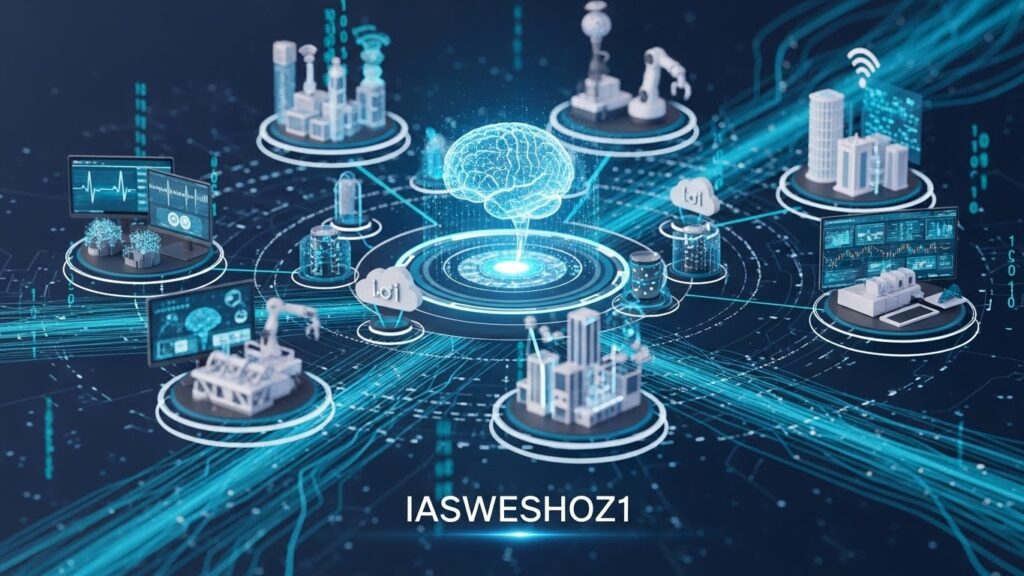
The digital landscape continues to evolve at breakneck speed, introducing concepts that redefine how businesses operate and how technology serves humanity. Among these emerging frameworks stands iasweshoz1—a term that’s capturing attention across tech circles, business sectors, and innovation hubs. While it may sound like cryptic code at first glance, iasweshoz1 represents something far more significant: an integrated approach to intelligent automation that combines artificial intelligence, systems connectivity, and hardware optimization into one cohesive ecosystem.
Unlike traditional single-purpose tools or isolated software solutions, iasweshoz1 functions as a comprehensive framework where multiple technologies converge to solve complex challenges. The name itself breaks down into meaningful components: “I” for intellect and intelligent systems, “A” for automation that reduces manual effort, “S” for interconnected systems, and “WESHOZ1” representing Web Ecosystem Software Hardware Optimization Zone 1—an ideal digital environment where all technological elements work in seamless harmony.
What makes iasweshoz1 particularly relevant today is its timing. We’re living in an era where siloed technologies no longer suffice. Businesses need solutions that can communicate across platforms, learn from data patterns, and adapt to changing conditions without constant human intervention. From healthcare facilities using AI-powered diagnostics to manufacturing plants optimizing production lines in real time, the principles behind iasweshoz1 are already reshaping entire industries. This article explores how this framework operates, where it’s making the biggest impact, and what challenges lie ahead as we build increasingly intelligent digital ecosystems.
The Core Architecture of IASWESHOZ1
At its foundation, iasweshoz1 operates as an information system that enables diverse technologies to work collaboratively rather than independently. Think of it as the conductor of a digital orchestra, where each instrument—whether it’s machine learning algorithms, IoT sensors, cloud computing resources, or automated workflows—plays its part in perfect synchronization. This architectural approach prioritizes interoperability, ensuring that data flows smoothly between hardware devices, software applications, and analytical platforms without bottlenecks or compatibility issues.
The intelligence layer within iasweshoz1 sets it apart from conventional automation systems. Rather than simply executing pre-programmed commands, the framework incorporates adaptive learning capabilities that allow connected systems to recognize patterns, predict outcomes, and optimize processes autonomously. For instance, in a smart manufacturing environment utilizing iasweshoz1 principles, machines don’t just follow static production schedules—they adjust operations based on real-time supply chain data, equipment performance metrics, and quality control feedback. This level of dynamic responsiveness transforms how organizations approach efficiency and resource management.
The optimization zone concept embedded in iasweshoz1 focuses on creating ideal conditions for technology performance. This involves continuous monitoring of system health, automated identification of inefficiencies, and proactive adjustments before problems escalate. By establishing this optimization-first mentality, the framework helps organizations reduce downtime, minimize waste, and maximize the return on technology investments. The “Zone 1” designation suggests this is an evolving standard, with future iterations potentially expanding capabilities as new technologies emerge and integration challenges are overcome.
Read more:Alexousa104
Transforming Healthcare Through Intelligent Systems
Healthcare represents one of the most promising application areas for iasweshoz1, where the stakes are highest and the potential for impact is profound. Medical institutions implementing this framework leverage AI-powered diagnostic tools that analyze patient data with unprecedented speed and accuracy, identifying disease markers that might escape human observation. These systems don’t replace healthcare professionals but rather augment their capabilities, providing decision support that leads to earlier interventions and better patient outcomes.
Patient monitoring has been revolutionized through iasweshoz1-based approaches that connect wearable devices, electronic health records, and predictive analytics platforms. Hospitals can now track vital signs continuously across entire wards, with intelligent systems flagging concerning trends before they become emergencies. This proactive monitoring extends beyond hospital walls, enabling remote patient management programs where individuals with chronic conditions receive personalized care recommendations based on real-time health data transmitted from home monitoring equipment. The result is fewer emergency room visits, reduced hospital readmissions, and improved quality of life for patients managing long-term health challenges.
Robotic surgery systems exemplify how iasweshoz1 integrates multiple technological components to achieve outcomes impossible through human effort alone. These platforms combine precision robotics with advanced imaging, AI-guided navigation, and real-time feedback mechanisms that help surgeons perform minimally invasive procedures with extraordinary accuracy. The intelligent systems assist with steady instrument control, optimal incision placement, and even predictive modeling of how tissues will respond to surgical interventions. As these technologies mature and become more widely adopted, they’re democratizing access to specialized surgical expertise, allowing skilled procedures to be performed in facilities that previously couldn’t support such advanced capabilities.
Revolutionizing Financial Services and Security
The finance sector has embraced iasweshoz1 principles to combat increasingly sophisticated fraud while accelerating transaction processing. Modern fraud detection systems built on this framework analyze millions of transactions simultaneously, identifying suspicious patterns that traditional rule-based systems would miss. Machine learning models within these implementations continuously evolve, learning from new fraud tactics and adjusting detection algorithms without requiring manual reprogramming. This adaptive approach has dramatically reduced false positives while catching genuine threats more effectively, protecting both financial institutions and their customers.
Risk analysis has become more nuanced and predictive thanks to iasweshoz1-based systems that synthesize data from diverse sources—market indicators, geopolitical events, social media sentiment, historical patterns, and real-time trading activity. Investment firms utilizing these capabilities gain competitive advantages through better-informed decision-making and more accurate forecasting of market movements. The systems don’t simply crunch numbers; they contextualize information, recognize correlations across seemingly unrelated data points, and present actionable insights that human analysts can validate and act upon swiftly.
Automated trading platforms represent perhaps the most visible application of iasweshoz1 in finance, where algorithms execute transactions in microseconds based on complex strategies that balance risk tolerance, market conditions, and investment objectives. These systems operate at speeds impossible for human traders while maintaining consistent discipline unaffected by emotional biases. Beyond pure speed, the intelligence embedded in these platforms allows them to learn from market outcomes, refining strategies over time and adapting to changing market dynamics. The result is more efficient capital allocation, tighter bid-ask spreads, and increased market liquidity that benefits all participants.
Smart Manufacturing and Industrial Optimization
Manufacturing environments have undergone dramatic transformation through iasweshoz1 implementations that connect every aspect of production into unified, intelligent systems. Smart factories utilize networks of IoT sensors monitoring equipment performance, environmental conditions, material flows, and quality metrics across entire facilities. This comprehensive data collection feeds analytical engines that identify optimization opportunities—whether adjusting machine speeds to reduce energy consumption, resequencing production runs to minimize changeover time, or predicting maintenance needs before equipment failures occur.
The concept of predictive maintenance exemplifies how iasweshoz1 creates value in industrial settings. Rather than following fixed maintenance schedules that either waste resources on premature servicing or risk unexpected breakdowns, intelligent systems analyze vibration patterns, temperature fluctuations, power consumption, and other operational signatures to determine precisely when maintenance is needed. This approach extends equipment lifespan, reduces spare parts inventory, and virtually eliminates unplanned downtime that disrupts production schedules and creates costly delays.
Quality control has been elevated from reactive inspection to proactive process management through iasweshoz1-enabled vision systems and sensor networks. These platforms identify defects in real time, trace issues back to specific production variables, and automatically adjust processes to prevent future occurrences. In high-volume manufacturing where even small defect rates translate to significant costs, this capability delivers measurable financial benefits while enhancing product consistency. The systems also generate detailed quality documentation automatically, satisfying regulatory requirements without imposing administrative burdens on production teams.
Personalizing Education and E-Commerce Experiences
Educational institutions implementing iasweshoz1 principles are moving beyond one-size-fits-all instruction toward truly personalized learning experiences. Intelligent tutoring systems observe how individual students interact with material, identifying knowledge gaps, learning style preferences, and optimal challenge levels. These platforms then adapt content delivery, pacing, and assessment methods to match each student’s needs, providing additional support where necessary while allowing advanced learners to progress more rapidly. The result is improved comprehension, higher engagement, and better educational outcomes across diverse student populations.
Learning analytics powered by iasweshoz1 frameworks give educators unprecedented visibility into classroom dynamics and student progress. Rather than relying solely on periodic test scores, teachers receive continuous feedback about which concepts are causing confusion, which instructional approaches are most effective, and which students might be falling behind before it becomes evident through traditional assessments. This intelligence enables timely interventions that prevent small learning gaps from becoming insurmountable obstacles, ultimately improving graduation rates and preparing students more effectively for future academic and career challenges.
E-commerce platforms leveraging iasweshoz1 create shopping experiences that feel remarkably intuitive and personalized. Recommendation engines analyze browsing behavior, purchase history, demographic information, and even contextual factors like time of day or current events to suggest products with uncanny relevance. These systems understand that the same customer might be shopping for themselves, buying gifts, or researching products for completely different purposes, and they adjust recommendations accordingly. The sophistication extends to dynamic pricing, inventory allocation, and marketing message customization—all orchestrated through intelligent systems that continuously optimize for customer satisfaction and business profitability.
Creating Smart Cities and Connected Living Spaces
Smart home ecosystems represent consumer-facing applications of iasweshoz1 that are already transforming daily life for millions. These systems integrate lighting, climate control, security devices, appliances, and entertainment systems into cohesive networks that respond to occupant preferences and behavioral patterns. The intelligence goes beyond simple automation—learning when residents typically wake, adjusting temperatures for optimal comfort and efficiency, and even predicting when someone is arriving home to prepare the environment accordingly. This creates living spaces that genuinely adapt to human needs rather than requiring constant manual adjustment.
Energy management stands out as a particularly impactful application, where iasweshoz1-based home systems optimize power consumption by coordinating device usage, integrating with renewable energy sources, and taking advantage of time-of-use utility rates. Smart thermostats avoid running heating or cooling systems during peak-rate periods unless necessary, water heaters schedule operation for off-peak hours, and battery storage systems charge when electricity is cheapest while providing power during expensive peak times. These optimizations reduce utility costs substantially while contributing to grid stability and environmental sustainability.
At the urban scale, smart city implementations using iasweshoz1 principles coordinate traffic management, public transportation, street lighting, waste collection, and emergency services into integrated systems that improve efficiency and quality of life. Traffic signals adjust timing based on actual congestion patterns rather than fixed schedules, public transit vehicles communicate with infrastructure to minimize delays, and street lighting dims in low-traffic periods to conserve energy while maintaining safety. Emergency response systems utilize real-time data from multiple sources to optimize dispatch decisions and route responders around traffic congestion. These improvements accumulate into cities that function more smoothly, consume fewer resources, and provide better services to residents.
Navigating Challenges and Ethical Considerations
Despite its tremendous potential, implementing iasweshoz1 faces significant technical challenges, particularly around systems integration. Different technologies often use incompatible communication protocols, data formats, and security frameworks, requiring substantial engineering effort to create seamless connections. Organizations must invest in standardization, develop middleware solutions, and sometimes accept compromises that limit functionality to achieve interoperability. These integration hurdles can extend project timelines, increase costs, and create ongoing maintenance burdens as individual system components are updated or replaced.
Cybersecurity concerns escalate dramatically as systems become more interconnected. In traditional isolated systems, a security breach affects only that specific platform. But in iasweshoz1 environments where everything connects, a single vulnerability can provide attackers access to entire networks. The attack surface expands exponentially, requiring comprehensive security strategies that address physical device security, network communication encryption, access control management, and continuous threat monitoring. Organizations must balance connectivity benefits against security risks, implementing defense-in-depth approaches with multiple protective layers and preparing incident response plans for when breaches occur.
Ethical considerations around iasweshoz1 implementations demand careful attention, particularly regarding privacy, algorithmic bias, and employment impacts. Systems that collect and analyze personal data must be designed with strong privacy protections, giving individuals transparency about what information is gathered and how it’s used. AI models within these frameworks can perpetuate or amplify existing biases if training data reflects historical inequities, potentially leading to discriminatory outcomes in critical areas like healthcare, finance, and education. Additionally, as automation increases, organizations have responsibilities to displaced workers—providing retraining opportunities, managing workforce transitions thoughtfully, and ensuring the benefits of technological advancement are broadly shared rather than concentrated among a privileged few.
The Future Trajectory of IASWESHOZ1
Looking ahead, iasweshoz1 represents more than just current technological capabilities—it’s a blueprint for how intelligent systems will evolve in coming years. The convergence of artificial intelligence, Internet of Things networks, big data analytics, and automation will only deepen, creating increasingly sophisticated ecosystems where machines and humans collaborate more effectively than ever before. Emerging technologies like edge computing will push intelligence closer to where data originates, reducing latency and enabling real-time responses even in bandwidth-constrained environments. Quantum computing may eventually unlock optimization and simulation capabilities that seem impossible with today’s classical computers.
The vision extends toward creating a more responsive world where intelligent systems anticipate needs, optimize resource allocation, and solve problems proactively rather than reactively. Environmental monitoring networks could predict natural disasters with greater accuracy and earlier warning times. Healthcare systems might identify disease outbreaks before they spread widely. Transportation networks could virtually eliminate traffic congestion through coordinated vehicle routing and timing. While these outcomes aren’t guaranteed and depend on continued technological advancement, sustained investment, and thoughtful implementation, the directional trajectory seems clear.
Success will require not just technical innovation but also governance frameworks that ensure iasweshoz1 developments serve humanity’s best interests. This means establishing clear ethical guidelines for AI development, creating transparent accountability mechanisms when automated systems make consequential decisions, and fostering inclusive conversations about how these technologies should be deployed. International cooperation will be essential as digital systems increasingly transcend national boundaries. By approaching iasweshoz1 with both enthusiasm for its potential and wisdom about its challenges, we can work toward a future where intelligent automation genuinely improves lives while respecting human dignity, privacy, and autonomy.
Conclusion: Embracing the IASWESHOZ1 Revolution
The emergence of iasweshoz1 as a comprehensive framework for intelligent automation marks a pivotal moment in technological evolution. We’re moving beyond isolated tools toward integrated ecosystems where artificial intelligence, connected devices, and automated processes work in concert to solve humanity’s most complex challenges. From hospitals saving lives through AI-assisted diagnostics to cities optimizing infrastructure for millions of residents, the real-world applications are already demonstrating remarkable value.
Yet technology alone doesn’t guarantee positive outcomes. The most successful iasweshoz1 implementations will be those guided by clear ethical principles, robust security practices, and genuine commitment to improving human wellbeing. Organizations exploring these capabilities should start with well-defined problems, build security and privacy protections from the ground up, and maintain transparency about how intelligent systems make decisions that affect people’s lives.
As you consider iasweshoz1’s relevance to your industry or interests, remember that this isn’t about replacing human judgment with machine decision-making—it’s about augmenting human capabilities with technological tools that handle data-intensive, repetitive, or ultra-fast-response tasks more effectively than people can. The future belongs to those who can harness these intelligent systems while maintaining the wisdom, creativity, and compassion that remain uniquely human. Whether you’re a business leader, technology professional, or simply someone interested in where our digital world is headed, understanding iasweshoz1 provides valuable insight into the automated, intelligent, and interconnected future taking shape around us.